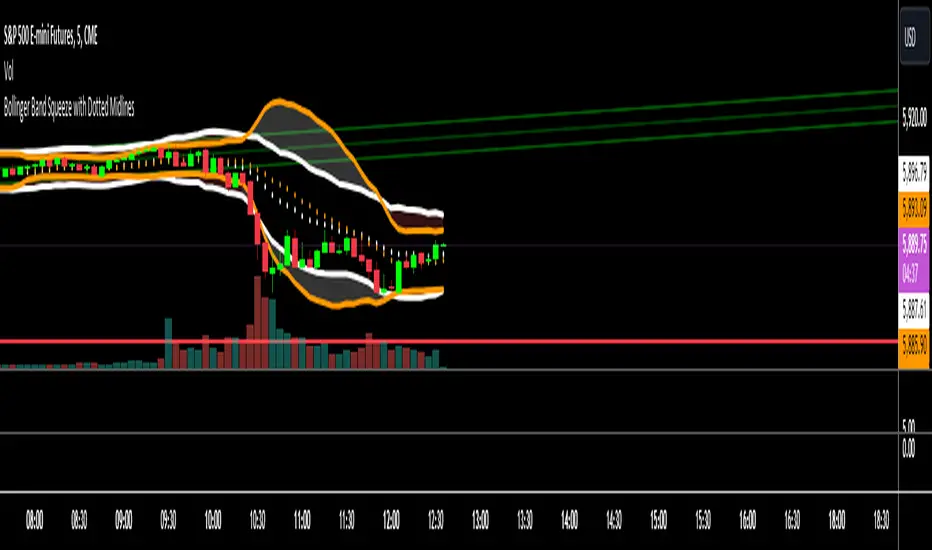
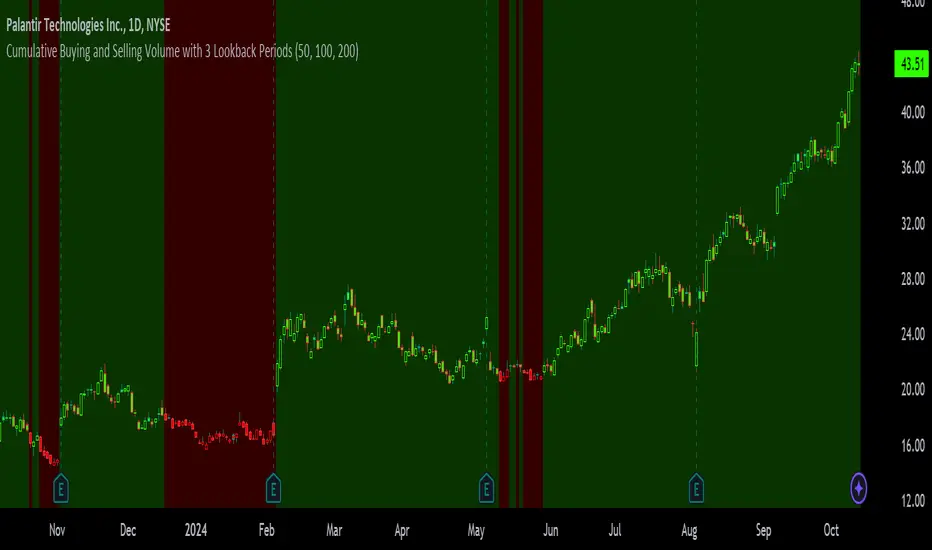
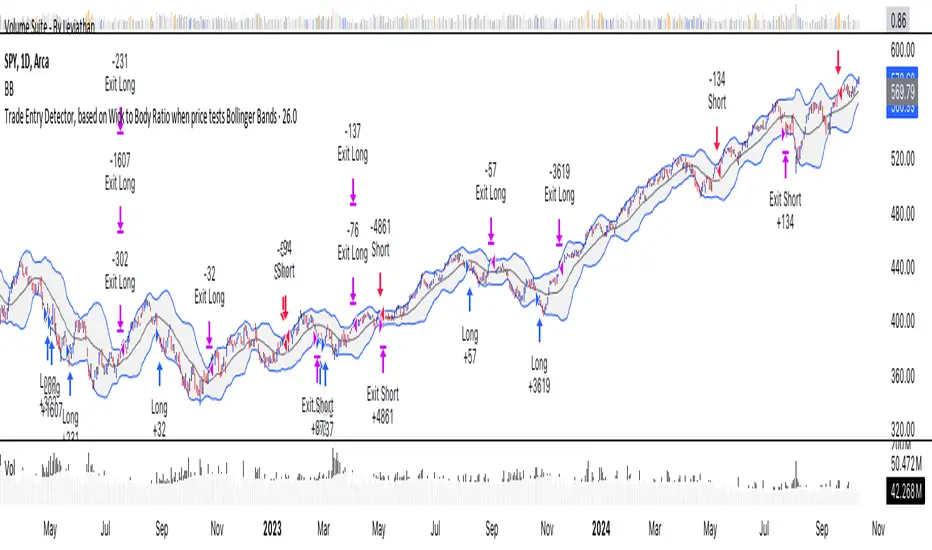
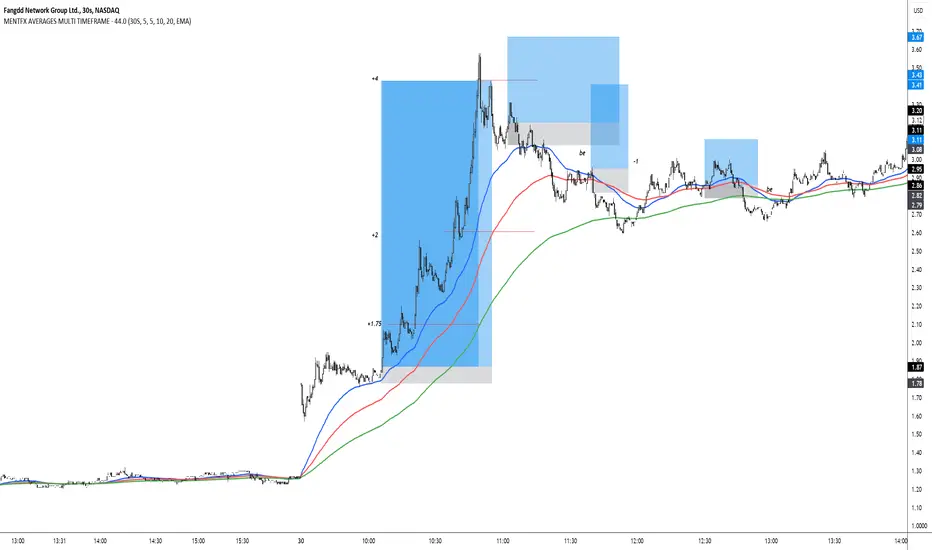
L1 Mid-Term Swing Oscillator v1Level: 1
Background
Oscillators are widely used set of technical analysis indicators. They are popular primarily for their ability to alert of a possible trend change before that change manifests itself in price and volume . They should work best in times of sideways markets.
Function
L1 Short-Mid-Long-Term Swing Oscillator puts three terms of oscillators to cover short-term, middle-term and long-term oscillators at the same time. By resonating all these three oscillators, short-term scalping signal and middle term swing signal are disclosed. You can see both short and mid term signal under one indicator which give you more confidence to follow the trend.
Key Signal
I didn't handle the key signals well. I piled up all the useful signals I found, and it is really difficult to classify them one by one. I feel tired when I think about this problem. Therefore, the code of the overall signal is rather confusing, sorry.
Pros and Cons
Pros:
1. Three oscillators are used to cover short, mid, long term oscillations.
2. Short-Mid term resonance can be observed to have higher confidence level.
3. Use single indicator for scalping and swing trading is possible.
Cons:
1. No deep dive into very accurate long and short entries.
2. A trade off between sensitivity and stability may be needed by traders' subjective judge.
Remarks
I enjoyed the fun of put three different oscillator together to cover short, mid, long terms. But how to use them perfectly is really more brainstorming.
Readme
In real life, I am a prolific inventor. I have successfully applied for more than 60 international and regional patents in the past 12 years. But in the past two years or so, I have tried to transfer my creativity to the development of trading strategies. Tradingview is the ideal platform for me. I am selecting and contributing some of the hundreds of scripts to publish in Tradingview community. Welcome everyone to interact with me to discuss these interesting pine scripts.
The scripts posted are categorized into 5 levels according to my efforts or manhours put into these works.
Level 1 : interesting script snippets or distinctive improvement from classic indicators or strategy. Level 1 scripts can usually appear in more complex indicators as a function module or element.
Level 2 : composite indicator/strategy. By selecting or combining several independent or dependent functions or sub indicators in proper way, the composite script exhibits a resonance phenomenon which can filter out noise or fake trading signal to enhance trading confidence level.
Level 3 : comprehensive indicator/strategy. They are simple trading systems based on my strategies. They are commonly containing several or all of entry signal, close signal, stop loss, take profit, re-entry, risk management, and position sizing techniques. Even some interesting fundamental and mass psychological aspects are incorporated.
Level 4 : script snippets or functions that do not disclose source code. Interesting element that can reveal market laws and work as raw material for indicators and strategies. If you find Level 1~2 scripts are helpful, Level 4 is a private version that took me far more efforts to develop.
Level 5 : indicator/strategy that do not disclose source code. private version of Level 3 script with my accumulated script processing skills or a large number of custom functions. I had a private function library built in past two years. Level 5 scripts use many of them to achieve private trading strategy.
Pesquisar nos scripts por "swing trading"
Why is it ok to backtest on TradingView from now on!TradingView backtester has bad reputation. For a good reason - it was producing wrong results, and it was clear at first sight how bad they were.
But this has changed. Along with many other improvements in its PineScript coding capabilities, TradingView fixed important bug, which was the main reason for miscalculations. TradingView didn't really speak out about this fix, so let me try :)
Have a look at this short code of a swing trading strategy (PLEASE DON'T FOCUS ON BACKTEST RESULTS ATTACHED HERE - THEY DO NOT MATTER). Sometimes entry condition happens together with closing condition for the already ongoing trade. Example: the condition to close Long entry is the same as a condition to enter Short. And when these two aligned, not only a Long was closed and Short was entered (as intended), but also a second Short was entered, too!!! What's even worse, that second short was not controlled with closing conditions inside strategy.exit() function and it very often lead to losses exceeding whatever was declared in "loss=" parameter. This could not have worked well...
But HOORAY!!! - it has been fixed and won't happen anymore. So together with other improvements - TradingView's backtester and PineScript is now ok to work with on standard candlesticks :)
Yep, no need to code strategies and backtest them on other platforms anymore.
----------------
Having said the above, there are still some pitfalls remaining, which you need to be aware of and avoid:
Don't backtest on HeikenAshi, Renko, Kagi candlesticks. They were not invented with backtesting in mind. There are still using wrong price levels for entries and therefore producing always too good backtesting results. Only standard candlesticks are reliable to backtest on.
Don't use Trailing Stop in your code. TradingView operates only on closed candlesticks, not on tick data and because of that, backtester will always assume price has first reached its favourable extreme (so 'high' when you are in Long trade and 'low' when you are in Short trade) before it starts to pull back. Which is rarely the truth in reality. Therefore strategies using Trailing Stop are also producing too good backtesting results. It is especially well visible on higher timeframe strategies - for some reason your strategy manages to make gains on those huge, fat candlesticks :) But that's not reality.
"when=" inside strategy.exit() does not work as you would intuitively expect. If you want to have logical condition to close your trade (for example - crossover(rsi(close,14),20)) you need to place it inside strategy.close() function. And leave StopLoss + TakeProfit conditions inside strategy.exit() function. Just as in attached code.
If you're working with pyramiding, add "process_orders_on_close=ANY" to your strategy() script header. Default setting ("=FIFO") will first close the trade, which was opened first, not the one which was hit by Stop-Loss condidtion.
----------------
That's it, I guess :) If you are noticing other issues with backtester and would like to share, let everyone know in comments. If the issue is indeed a bug, there is a chance TradingView dev team will hear your voice and take it into account when working on other improvements. Just like they heard about the bug I described above.
P.S. I know for a fact that more improvements in the backtesting area are coming. Some will change the game even for non-coding traders. If you want to be notified quickly and with my comment - gimme "follow".
Complete Trend Trading System [Fhenry0331]This system was designed for the beginner trader to make money swing trading. Your losses will be small and your gains will be mostly large. You will show consistent profit. Period.
The system works on any security you like to trade. I used GBPUSD as an example because of the up swing and down swing it had recently. I tried to put as much information of how the system works in the chart. Hope it helps and is not to cluttered.
I will reiterate how the system works here: Everything is based off of closed price.
Legend
Uptrend: Buy
Green bar: initial start of an uptrend or uptrend continuing. Place order above that bar. If the initial bar does not stray too far from the MVWAP , I will place orders above subsequent bars if no filled occurred.
If initial start of the trend is missed, I will wait for the pullback. A pullback is a close below the MVWAP, and a close above the EMA (Low), RSI is above 50. Orders are placed above the pullback bars with plotted char "B" and also plotted green triangle up. Again orders are placed above those bars. the bars do not notate automatic buys. Don't chase anything. You will miss the initial bar on something because of news or earnings and it rocket up. Just wait, it will pullback. If it doesn't, to hell with it, on to the next.
Take profits: In the indicator you will see "T." That notates to take some profits. It is a suggestion. I was always told to take profits into spikes, as well as you can never lose money if you take profits. Up to you if you want to scale out and take the suggested profits or not.
Exit Completely: In an uptrend, close your entire position on bars colored yellow or red. (Again, closed bars)
In uptrend bars colored orange and black, do nothing, they are just pullback bars. Look for the buy pullback signal, then follow pullback buy rules for an uptrend.
Downtrend: Short
Red bar: initial start of a downtrend or downtrend continuing. Place order below the bar. If the initial bar does not stray too far fro the MVWAP, place orders below subsequent bars.
If initial start on the downtrend is missed, wait for the pullback. A pullback is a close above the MVWAP, and close below the EMA(Low). RSI is below 50. Orders are placed below the pullback bars with the plotted char "S" and also plotted red triangle. Again those bars are not automatic shorts, orders are placed below them. Don't chase anything. Wait for price to come into your plan. The idea FOMO is the stupidest thing ever, how can you miss out on something when it is always there. The market is always there and something will come into your zone. Chill.
"T": same as in uptrend, suggestion to take some profits.
Exit Completely: In a downtrend, close your entire position on bars colored orange or green.
In downtrend you will see bars colored yellow and black, do nothing, they are pullback bars. Look for the pullback short signal and follow pullback short rules.
If you have any questions get at me. Take a look at it on what you trade. Flip it through different securities.
Best of luck in all you do.
P.S. You should not take a trade right before earnings. You should also exit a trade right before earnings.
Binque's Multi-Moving Average Binque's Multi-Moving Average - One indicator with four simple moving average and four exponential moving averages, plus as a bonus a Day High moving average and a Day Low Moving Average.
Simple Moving Average or MA(14), MA(50), MA(100) and MA(200) all in one indicator
Exponential Moving Average or EMA(8), EMA(14), EMA(20) and EMA(33) all in one indicator
Day High Moving Average - Tracks the Daily High versus most moving averages track the daily close.
Day Low Moving Average - Tracks the Daily Low versus most moving average track the daily close.
To Disable moving averages, Set the color to the chart background and then set the length to 1 and uncheck.
I Use the Daily High Moving Average to track upward resistance in a stock movement for Swing Trading.
I Use the Daily Low Moving Average to track my trailing stop in a stock movement for Swing Trading.
Big Snapper Alerts R2.0 by JustUncleLThis is a diversified Binary Option or Scalping Alert indicator originally designed for lower Time Frame Trend or Swing trading. Although you will find it a useful tool for higher time frames as well.
The Alerts are generated by the changing direction of the ColouredMA (HullMA by default), you then have the choice of selecting the Directional filtering on these signals or a Bollinger swing reversal filter.
The filters include:
Type 1 - The three MAs (EMAs 21,55,89 by default) in various combinations or by themselves. When only one directional MA selected then direction filter is given by ColouredMA above(up)/below(down) selected MA. If more than one MA selected the direction is given by MAs being in correct order for trend direction.
Type 2 - The SuperTrend direction is used to filter ColouredMA signals.
Type 3 - Bollinger Band Outside In is used to filter ColouredMA for swing reversals.
Type 4 - No directional filtering, all signals from the ColouredMA are shown.
Notes:
Each Type can be combined with another type to form more complex filtration.
Alerts can also be disabled completely if you just want one indicator with one colouredMA and/or 3xMAs and/or Bollinger Bands and/or SuperTrend painted on the chart.
Warning:
Be aware that combining Bollinger OutsideIn swing filter and a directional filter can be counter productive as they are opposites. So careful consideration is needed when combining Bollinger OutsideIn with any of the directional filters.
Hints:
For Binary Options try ColouredMA = HullMA(13) or HullMA(8) with Type 2 or 3 Filter.
When using Trend filters SuperTrend and/or 3xMA Trend, you will find if price reverses and breaks back through the Big Fat Signal line, then this can be a good reversal trade.
Some explanation about the what Hull Moving average and ideas of how the generated in Big Snapper can be used:
tradingsim.com
forextradingstrategies4u.com
Inspiration from @vdubus
Big Snapper's Bollinger OutsideIn Swing filter in Action:
Colored Volume Bars [LazyBear]Edgar Kraut proposed this simple colored volume bars strategy for swing trading.
This is how the colors are determined:
- If today’s closing price and volume are greater than 'n' days ago, color today’s volume bar green.
- If today’s closing price is greater than 'n' days ago but volume is not, color today’s volume bar blue.
- Similarly, if today’s closing price and volume is less than 'n' days ago, color today’s volume bar orange.
- If today’s closing price is less than 'n' days ago but volume is not, color today’s volume bar red.
Buy the green or blue volume bars, use a 1% trailing stop, and stand aside on red or orange bars.
As you see, this is more for entry confirmation. I have not tested this on any instrument.
You may have to tune the lookback period for your instrument. Default is 10.
More info:
"A color-based system for short-term trading" - www.traders.com
List of all my indicators:
EMA Trend Reversal (Regime Change)
This indicator highlights EMA slope reversals that often coincide with trend or regime shifts, using a simple two-stage visual system.
It is especially effective on higher timeframes (Daily / Weekly) for swing trading and trend-bias awareness.
Detailed User Guide
What the signals mean
Unconfirmed signals (triangles)
Yellow triangle below price
- EMA is turning up intrabar (not yet confirmed)
Yellow triangle above price
- EMA is turning down intrabar (not yet confirmed)
Unconfirmed signals may repeat at a set interval until confirmation.
Confirmed signals (dots)
Green dot below price
- EMA slope has confirmed upward (bullish regime shift)
Red dot above price
- EMA slope has confirmed downward (bearish regime shift)
Confirmed dots only appear after the candle closes.
Alerts
This script provides two alerts only:
EMA Reversal UP
EMA Reversal DOWN
Each alert can fire on:
Initial unconfirmed reversal
Reminder interval while unconfirmed
Final confirmed reversal
Alerts will NOT fire unless this indicator is active on at least one chart.
It may be kept on a chart you do not actively trade.
Settings
EMA Length (default: 21)
Reminder interval (minutes)
Show / hide unconfirmed triangles
Show / hide confirmed dots
Dot transparency
Colors (locked to preserve signal meaning)
Best use cases
Identifying trend or regime changes
Weekly swing trade entries and exits
Holding-period guidance during trends
Alert-based monitoring without watching charts
This is not a scalp or oscillator signal.
It works best when combined with structure, support/resistance, or higher-timeframe context.
Disclaimer
This indicator is provided for educational and informational purposes only.
It does not constitute financial, investment, or trading advice.
All trading involves risk. Use at your own discretion.
EMA Trend Reversal (Regime Change)EMA Trend Reversal (Regime Change)
This indicator highlights EMA slope reversals that often coincide with trend or regime shifts, using a simple two-stage visual system.
It is especially effective on higher timeframes (Daily / Weekly) for swing trading and trend-bias awareness.
Detailed User Guide
What the signals mean
Confirmed signals (dots)
Green dot below price
- EMA slope has confirmed upward (bullish regime shift)
Red dot above price
- EMA slope has confirmed downward (bearish regime shift)
Confirmed dots only appear after the candle closes.
Unconfirmed signals (triangles)
Yellow triangle below price
- EMA is turning up intrabar (not yet confirmed)
Yellow triangle above price
- EMA is turning down intrabar (not yet confirmed)
Unconfirmed signals may repeat at a set interval until confirmation.
Alerts
This script provides two alerts:
EMA Reversal UP
EMA Reversal DOWN
Each alert can fire on:
Initial unconfirmed reversal
Reminder interval while unconfirmed
Final confirmed reversal
Alerts will NOT fire unless this indicator is active on at least one chart.
It may be kept on a chart you do not actively trade.
Settings
EMA Length (default: 21)
Reminder interval (minutes)
Show / hide unconfirmed triangles
Show / hide confirmed dots
Dot transparency
Colors (locked to preserve signal meaning)
Best use cases
Identifying trend or regime changes
Weekly swing trade entries and exits
Holding-period guidance during trends
Alert-based monitoring without watching charts
This is not a scalp or oscillator signal.
It works best when combined with structure, support/resistance, or higher-timeframe context.
Disclaimer
This indicator is provided for educational and informational purposes only.
It does not constitute financial, investment, or trading advice.
All trading involves risk. Use at your own discretion.
UT Bot final 15M XAUUSD High WinrateThis script is a 15-minute timeframe optimized swing trading strategy, designed for traders who prefer structured, rule-based entries and exits with a focus on trend quality and risk control.
The strategy is based on a modified UT Bot logic, enhanced with:
Sideways market filtering using ADX and ATR volatility conditions
Confirmed higher-quality entries by waiting for candle close on the signal timeframe
Retracement-based limit entries to improve average entry price
Multi-level partial take profits (TP1–TP5)
Configurable stop loss (fixed pips or percentage)
Automatic break-even after TP1
Full position close on opposite signal
The system is especially suitable for swing and semi-swing traders who want to:
Reduce trades during low-quality, ranging market conditions
Manage positions with partial exits and predefined risk
Use the strategy as a foundation for automation or alert-based trading bots
All key parameters (sensitivity, filters, take profits, stop loss, and entry behavior) are fully adjustable, allowing traders to adapt the strategy to different risk profiles and market conditions.
UT Bot Gereee88 (XAUUSD pip partial TP)This strategy is based on the UT Bot trading logic and is designed for swing trading with automated trade management.
It includes multiple configurable partial take profit levels, dynamic exits, and automatic position closure when an opposite signal appears.
All parameters such as sensitivity, profit targets, and behavior can be adjusted by the user to match different instruments, timeframes, and risk preferences.
This strategy is intended for educational and analytical purposes and does not provide financial advice or performance guarantees.
MidZone Breakout Pro 🚀 MidZone Breakout Pro — Smart Balance Zone Signals
🧭 Equilibrium-Based Market Insight
MidZone Breakout Pro identifies key balance levels in the market and highlights directional opportunities when price decisively moves away from equilibrium.
📐 Dynamic Midpoint Zone Mapping
Automatically plots a central price balance zone derived from recent market ranges, helping traders visualize fair value and expansion areas.
🎯 Clear Buy & Sell Signals
Generates clean bullish and bearish signals when price exits the balance zone with momentum.
🎨 High-Visibility Zone Visualization
Color-coded zones, background shading, and bold signal markers provide instant clarity without chart clutter.
🎚 Customizable Sensitivity
Adjustable lookback period and zone width allow seamless adaptation across scalping, intraday, and swing trading.
🕰 Non-Repainting Signals
All signals are calculated using confirmed price action and remain stable on historical charts.
⚡ Lightweight & Fast Performance
Optimized design ensures smooth performance across all instruments and timeframes.
🛠 How to Use (Safe Version)
📉 **Buy Signal**: Appears when price moves strongly above the balance zone
📈 **Sell Signal**: Appears when price moves strongly below the balance zone
🟨 **Neutral Zone**: Indicates consolidation or equilibrium conditions
Best used in combination with trend direction, support/resistance, or volume confirmation.
⚠️ Disclaimer: This indicator is for educational and analytical purposes only. It does not provide financial advice. Always apply proper risk management.
Candle Anatomy (feat. Dr. Rupward)# Candle Anatomy (feat. Dr. Rupward)
## Overview
This indicator dissects a single Higher Timeframe (HTF) candle and displays it separately on the right side of your chart with detailed anatomical analysis. Instead of cluttering your entire chart with analysis on every candle, this tool focuses on what matters most: understanding the structure and strength of the most recent HTF candle.
---
## Why I Built This
When analyzing price action, I often found myself manually calculating wick-to-body ratios, estimating retracement levels, and trying to gauge candle strength. This indicator automates that process and presents it in a clean, visual format.
The "Dr. Rupward" theme is just for fun – a lighthearted way to present technical analysis. Think of it as your chart's "health checkup." Don't take it too seriously, but do take the data seriously!
---
## How It Works
### 1. Candle Decomposition
The indicator breaks down the HTF candle into three components:
- **Upper Wick %** = (High - max(Open, Close)) / Range × 100
- **Body %** = |Close - Open| / Range × 100
- **Lower Wick %** = (min(Open, Close) - Low) / Range × 100
Where Range = High - Low
### 2. Strength Assessment
Based on body percentage:
- **Strong** (≥70%): High conviction move, trend likely to continue
- **Moderate** (40-69%): Normal price action
- **Weak** (<40%): Indecision, potential reversal or consolidation
### 3. Pressure Analysis
- **Upper Wick** indicates selling pressure (bulls pushed up, but sellers rejected)
- **Lower Wick** indicates buying pressure (bears pushed down, but buyers rejected)
Thresholds:
- ≥30%: Strong pressure
- 15-29%: Moderate pressure
- <15%: Weak pressure
### 4. Pattern Recognition
The indicator automatically detects:
| Pattern | Condition |
|---------|-----------|
| Doji | Body < 10% |
| Hammer | Lower wick ≥ 60%, Upper wick < 10%, Body < 35% |
| Shooting Star | Upper wick ≥ 60%, Lower wick < 10%, Body < 35% |
| Marubozu | Body ≥ 90% |
| Spinning Top | Body < 30%, Both wicks > 25% |
### 5. Fibonacci Levels
Displays key Fibonacci retracement and extension levels based on the candle's range:
**Retracement:** 0, 0.236, 0.382, 0.5, 0.618, 0.786, 1.0
**Extension:** 1.272, 1.618, 2.0, 2.618
**Negative Extension:** -0.272, -0.618, -1.0
These levels help identify potential support/resistance if price retraces into or extends beyond the analyzed candle.
### 6. Comparison with Previous Candle
When enabled, displays the previous HTF candle (semi-transparent) alongside the current one. This allows you to:
- Compare range expansion/contraction
- Observe momentum shifts
- Identify continuation or reversal setups
---
## Settings Explained
### Display Settings
- **Analysis Timeframe**: The HTF candle to analyze (default: Daily)
- **Offset from Chart**: Distance from the last bar (default: 15)
- **Candle Width**: Visual width of the anatomy candle
- **Show Previous Candle**: Toggle comparison view
### Fibonacci Levels
- Toggle individual levels on/off based on your preference
- Retracement levels for pullback analysis
- Extension levels for target projection
### Diagnosis Panel
- Shows pattern name, strength assessment, and expected behavior
- Can be toggled off if you prefer minimal display
---
## Use Cases
1. **Swing Trading**: Analyze daily candle structure before entering on lower timeframes
2. **Trend Confirmation**: Strong body % with minimal upper wick = healthy trend
3. **Reversal Detection**: Hammer/Shooting Star patterns with high wick %
4. **Target Setting**: Use Fibonacci extensions for take-profit levels
---
## Notes
- This indicator is designed for analysis, not for generating buy/sell signals
- Works best on liquid markets with clean price action
- The "diagnosis" is algorithmic interpretation, not financial advice
- Combine with your own analysis and risk management
---
## About the Name
"Dr. Rupward" is a playful persona I created – combining "Right" + "Upward" (my trading philosophy) with a doctor theme because we're "diagnosing" candle health. It's meant to make technical analysis a bit more fun and approachable. Enjoy!
---
## Feedback Welcome
If you find this useful or have suggestions for improvement, feel free to leave a comment. Happy trading!
Dynamic Supports + Volume Profile (Smart Time Selector)This indicator is an "All-in-One" tool designed to simplify Market Structure and Volume analysis on higher timeframes (especially Daily charts).
Its main innovation is the **Unique Period Selector**, which automatically adjusts 5 internal parameters (tolerance, pivot sensitivity, resolution, and historical depth) with a single click.
**🛠️ MAIN FEATURES:**
1. **Automatic Engine (1-5 Years):**
* Forget about manually setting pivot lengths or "Lookback".
* Select **"1 Year"**: The script scans for fast pivots and recent volume for *Swing Trading*.
* Select **"5 Years"**: The script filters noise and shows only "Rock-Solid" structures (Historical S/R) for *Long Term Investing*.
2. **"Merged" Support & Resistance (S/R):**
* The script detects Pivot Highs/Lows.
* **Fusion Logic:** If price bounces multiple times in the same zone (within calculated tolerance), the script updates the existing line instead of drawing a new one. It extends the line and counts the touches (e.g., "S (4)" means a Support validated 4 times).
* **Clean Chart:** Avoids visual noise.
3. **Lateral Volume Profile (VP):**
* Displays volume distribution to the right of the current price.
* **Orange POC (Point of Control):** Marks the exact price level with the highest trading volume in the selected period.
**🚀 HOW TO USE (STRATEGY):**
Best used on the **Daily Timeframe (1D)**:
* **Scenario 1: Mean Reversion**
* If price moves far from the **Orange POC**, look for it to act as a magnet.
* Enter when price touches a **Green Line (Support)** that aligns with a high volume node.
* **Scenario 2: Breakout**
* If price breaks a **Red Line (Resistance)** aggressively and the volume above is thin (low volume nodes), the move tends to be fast due to lack of friction.
* **Scenario 3: Multi-Timeframe Analysis**
* Use "5 Years" to mark your long-term zones.
* Switch to "1 Year" for tactical entries.
**🎨 VISUAL SETTINGS:**
* **Green Lines:** Demand Zones (Supports).
* **Red Lines:** Supply Zones (Resistances).
* **Dotted Orange Line:** POC (Fair Value).
* **Blue Bars:** Volume Profile.
**Disclaimer / Descargo:**
This script is designed for educational and analytical purposes on the daily timeframe. Use it to identify zones of interest, not as automatic buy/sell signals.
Stock Expansion Pullback Screener (v6)Recommended Stock Settings for the Intraday momentum stocks:
➡️ Timeframe: 15m
➡️ ATR Mult: 1.3
➡️ Max bars: 10–15
➡️ Swing trading
➡️ Timeframe: 1H / 4H
➡️ ATR Mult: 1.5
➡️ Max bars: 20–30
Liquidation Bubbles [OmegaTools]🔴🟢 Liquidation Bubbles — Advanced Volume & Price Stress Detector
Liquidation Bubbles is a professional-grade analytical tool designed to identify forced positioning events, stop-runs, and liquidation clusters by combining price displacement and volume imbalance into a single, statistically normalized framework.
This indicator is not a repainting signal tool and not a simple volume spike detector. It is a contextual market stress mapper, built to highlight areas where one-sided positioning becomes unstable and the probability of forced order execution (liquidations, stops, margin calls) materially increases.
---
## 🔬 Core Concept
Market liquidations do not occur randomly.
They emerge when price deviates aggressively from its volume-weighted equilibrium while volume itself becomes abnormal.
Liquidation Bubbles detects exactly this condition by:
* Estimating a **dynamic equilibrium price** using an *inverted volume-weighted moving average*
* Measuring **directional price stress** relative to that equilibrium
* Measuring **volume stress** relative to its own adaptive baseline
* Normalizing both into **Z-score–like metrics**
* Highlighting only **statistically extreme, asymmetric events**
The result is a clear visual map of stress points where market participants are most vulnerable.
---
⚙️ Methodology (How It Works)
1️⃣ Advanced Inverted VWMA (Equilibrium Engine)
The script uses a custom Advanced VWMA, where:
* High volume bars receive less weight
* Low volume bars receive more weight
This produces a **robust equilibrium level**, resistant to manipulation and volume bursts.
This equilibrium is used for **both price and volume normalization**, creating a consistent statistical framework.
---
2️⃣ Price Stress (Directional)
Price stress is calculated as:
* The **maximum deviation** between high/low and equilibrium
* Directionally signed (upside vs downside)
* Normalized by its own historical volatility
This allows the script to distinguish:
* Aggressive upside exhaustion
* Aggressive downside capitulation
---
3️⃣ Volume Stress
Volume stress is measured as:
* Deviation from volume equilibrium
* Normalized by historical volume dispersion
This filters out:
* Normal high-volume sessions
* Illiquid noise
And isolates abnormal participation imbalance.
---
4️⃣ Liquidation Logic
A liquidation event is flagged when:
* Both price stress and volume stress exceed adaptive thresholds
* The imbalance is directional and statistically extreme
Optional Combined Score Mode allows aggregation of price & volume stress into a single composite metric for smoother signals.
---
🔵 Bubble System (Signal Hierarchy)
The indicator plots **two tiers of bubbles**:
🟢🔴 Small Bubbles
* Early warning stress points
* Localized stop-runs
* Micro-liquidations
* Often precede reactions or short-term reversals
🟢🔴 Big Bubbles
* Full liquidation clusters
* Forced unwinds
* High probability exhaustion zones
* Frequently align with:
* Intraday extremes
* Range boundaries
* Reversal pivots
* Volatility expansions
Bubble color:
* **Green** → Downside liquidation (sell-side exhaustion)
* **Red** → Upside liquidation (buy-side exhaustion)
Bubble placement is **ATR-adjusted**, ensuring visual clarity without overlapping price.
---
🔄 Cross-Market Volume Analysis
The script allows optional **external volume sourcing**, enabling:
* Futures volume applied to CFDs
* Index volume applied to ETFs
* Spot volume applied to derivatives
This is critical when:
* Your traded instrument has unreliable volume
* You want **institutional-grade confirmation**
---
🧠 How to Use Liquidation Bubbles
This indicator is **not meant to be traded alone**.
Best use cases:
* 🔹 Confluence with support & resistance
* 🔹 Contextual confirmation for reversals
* 🔹 Identifying fake breakouts
* 🔹 Liquidity sweep detection
* 🔹 Risk management (avoid entering into liquidation zones)
Ideal for:
* Futures
* Indices
* Crypto
* High-liquidity FX pairs
* Intraday & swing trading
---
🎯 Who This Tool Is For
Liquidation Bubbles is designed for:
* Advanced discretionary traders
* Order-flow & liquidity-based traders
* Macro & index traders
* Professionals seeking **context**, not signals
If you want **where the market is fragile**, not just where price moved — this tool was built for you.
---
📌 Key Characteristics
✔ Non-repainting
✔ Statistically normalized
✔ Adaptive to volatility
✔ Works on all timeframes
✔ Futures & crypto ready
✔ No lagging indicators
✔ No moving average crosses
---
Liquidation Bubbles does not predict the future.
It shows you where the market is most likely to break.
— OmegaTools
Premium Money Flow Oscillator [NeuraAlgo]Premium Money Flow Oscillator (PMFO) — NeuraAlgo
The Premium Money Flow Oscillator (PMFO) is an advanced volume-weighted momentum engine designed to reveal true capital flow, not just price movement.
It combines multi-layer smoothing, zero-lag correction, and dynamic normalization to deliver a clean, responsive, and noise-resistant money flow signal suitable for both scalping and swing trading.
Unlike traditional oscillators, PMFO focuses on pressure behind price — showing when smart money accumulation or distribution is actively occurring.
🔹 Core Features
Volume-Weighted Money Flow
Measures real buying and selling pressure using price displacement × volume.
Filters out weak price moves with low participation.
Multi-Layer Smoothing Engine
EMA + SMA hybrid base smoothing
Gaussian noise reduction
Zero-Lag correction
Deep & Super smoothing layers
→ Result: ultra-smooth yet fast reaction to momentum shifts.
Dynamic Normalization
Automatically adapts to volatility.
Keeps signals consistent across all markets and timeframes.
🔹 Smart Zones & Visual Intelligence
Dynamic Overbought / Oversold Zones
Zones strengthen visually as momentum increases.
Strong zones highlight extreme institutional pressure.
Adaptive Gradient Coloring
Color intensity reflects money flow strength.
Instantly see dominance without reading numbers.
Background Pulse
Subtle market bias feedback (bullish / bearish pressure).
🔹 Multi-Timeframe Confirmation
Optional Higher Timeframe Money Flow Confirmation
Align lower-timeframe entries with higher-timeframe capital direction.
Ideal for trend validation and false-signal reduction.
🔹 Professional Dashboard
Live Money Flow Value
Market Flow State
Strength Percentage
MTF Trend Bias
Institutional-style status readout designed for quick decision making.
🔹 Best Use Cases
✔ Trend confirmation
✔ Momentum continuation entries
✔ Reversal exhaustion detection
✔ Divergence analysis
✔ Smart money flow tracking
⚠️ Notes
PMFO works best when combined with price structure, support/resistance, or trend context.
Extreme readings indicate pressure, not immediate reversal — always wait for confirmation.
Designed for traders who want clarity, not clutter.
Built for precision, not lag.
TrendSurfer Lite TrendSurfer Lite ⚡
Advanced Multi-Signal Trading Indicator for Precision Market Analysis
TrendSurfer Pro LITE is a comprehensive trading system combining multiple technical analysis tools into one powerful indicator. Designed for traders seeking high-probability setups with customizable filters.
Key Features:
📊 Core Signals
Triangle Signals (▲▼): Volume-weighted momentum entries with 10-level volume scoring
Master Trend System (△▽): Multi-EMA confirmation with RSI validation
Order Blocks (🟩🟥): Smart money institutional zones with rejection detection
Take Profit System (🎯): 8-indicator confluence system (RSI, Stochastic, Supertrend, CCI, MACD, BB, EMA Cross, Price Action)
🎯 Rejection Signals
Master Trend Rejections: Dynamic support/resistance from trend lines
EMA750 Rejections (White "R"): Major trend filter bounces
VWAP Rejections (Pink "W"): Institutional level reactions
Butterworth Filter Rejections (🟡): Advanced smoothing algorithm reversals
Session Rejections (⚡): Tokyo/London/NY session high/low bounces
Session Midline Rejections (Orange "M"): Half-range mean reversion
🌍 Session Analysis
Tokyo Session (💴): Asian market range with automatic extensions
London Session (💶): European volatility zones
New York Session (💵): US market key levels
Auto-adjusting timezone with UTC offset support
🔧 Advanced Filters
EMA750 Master Filter: Global trend alignment for all signals
VWAP Filter: Institutional bias confirmation
Yellow Box Filter (🟨): Consolidation zone proximity detection
3 Time Filters: Customizable trading windows with visual backgrounds
Volume Filter: Signal strength validation (6-10 scale)
📈 Visual Tools
VWAP Purple Candles: Special candle coloring for VWAP crosses above EMA750
Stochastic-based Candle Colors: Overbought/oversold visual cues
Previous Day Close Line: Key reference level
Master Trend Table: Real-time multi-indicator dashboard
⚙️ Customization
Full color customization for all elements
Adjustable line thickness and transparency
Configurable alert system for every signal type
19 independent alert conditions
Best For:
Intraday scalping and swing trading
Multi-timeframe analysis
Confluence-based trading strategies
Institutional level detection
Version 1.0 | Clean interface | Maximum flexibility | Professional-grade signals
Adjusted RSI - [JTCAPITAL]Adjusted RSI – is a modified and enhanced way to use the Relative Strength Index (RSI) combined with double normalization, adaptive exponential smoothing, and range compression to create a smoother, more readable, and more structurally consistent momentum oscillator for Trend-Following and momentum analysis.
This indicator is designed to solve several common RSI issues at once:
Excessive noise in raw RSI values
Inconsistent scaling across different market conditions
Difficulty identifying true momentum shifts versus random fluctuations
By re-centering, compressing, normalizing, and smoothing RSI data twice , this script produces a highly refined momentum curve that reacts smoothly while still respecting directional changes.
The indicator works by calculating in the following steps:
Raw RSI Calculation
The script begins by calculating a standard RSI using the selected RSI Length . This RSI is based on the closing price and measures relative strength by comparing average gains and losses over the defined period.
RSI Re-Centering
After the RSI is calculated, the script subtracts 50 from the RSI value.
This converts the RSI from its native scale into a centered oscillator ranging around 0 , making positive values bullish momentum and negative values bearish momentum.
Initial RSI Smoothing
The re-centered RSI is then smoothed using a Simple Moving Average (SMA) over the defined RSI Smoothing Length .
This step removes high-frequency noise and stabilizes short-term RSI fluctuations before further processing.
Range Compression (Clipping)
To prevent extreme outliers from dominating future calculations, the RSI values are clipped:
Values below -10 are forced to -10
Values above +10 are forced to +10
This creates a controlled and consistent RSI range, ensuring later normalization behaves reliably.
First Normalization (Min-Max Scaling)
The clipped RSI values are normalized over the selected Smoothing Length :
The lowest RSI value in the window is detected
The highest RSI value in the window is detected
Current RSI is scaled to a 0–100 range based on this dynamic range
This allows the indicator to adapt automatically to changing volatility and momentum environments.
First Adaptive Smoothing
The normalized RSI is then smoothed using a custom exponential smoothing formula controlled by the Smoothing Factor .
This smoothing behaves similarly to an EMA but allows explicit control over responsiveness.
Second Normalization
The smoothed values undergo a second min-max normalization over the same length.
This further stabilizes the oscillator and ensures consistent amplitude and structure, regardless of market regime.
Second Adaptive Smoothing
A second exponential smoothing pass is applied to the normalized data, further refining the curve and reducing residual noise.
Final Re-Centering
Finally, the indicator subtracts 50 from the smoothed normalized values, re-centering the oscillator around zero .
This produces the final Adjusted RSI line used for visualization and analysis.
Common interpretations for use include:
Bullish Momentum :
When the Adjusted RSI is above zero and rising, indicating strengthening bullish pressure.
Bearish Momentum :
When the Adjusted RSI is below zero and falling, indicating strengthening bearish pressure.
Momentum Shifts :
A change in slope (from falling to rising or vice versa) often signals an early momentum transition.
Divergences :
Differences between price direction and Adjusted RSI direction can highlight potential reversals.
Because the indicator is normalized and smoothed, it pairs exceptionally well with:
Trend filters (moving averages, trend lines)
Volatility filters
Higher-timeframe confirmation
Features and Parameters:
RSI Length
Defines the lookback period for the initial RSI calculation.
RSI Smoothing Length
Controls the SMA smoothing applied directly to the re-centered RSI.
Smoothing Length
Determines the lookback window used for both normalization passes.
Smoothing Factor
Controls the responsiveness of the adaptive exponential smoothing.
Lower values = smoother, slower reaction
Higher values = faster, more responsive reaction
Specifications:
Relative Strength Index (RSI)
RSI is a momentum oscillator that measures the speed and magnitude of recent price changes. By re-centering RSI around zero, the script converts it into a directional momentum oscillator that is easier to interpret for trend-following.
Simple Moving Average (SMA)
The SMA reduces short-term fluctuations in RSI, ensuring that only meaningful momentum changes proceed to later calculations.
Range Clipping
By limiting RSI values to a defined range, extreme spikes are prevented from skewing normalization. This keeps the indicator stable across different assets and timeframes.
Min-Max Normalization
Normalization rescales values into a fixed range (0–100), allowing momentum behavior to remain consistent regardless of volatility conditions.
Adaptive Exponential Smoothing
This smoothing technique gradually adjusts values toward new data based on the smoothing factor. It allows the indicator to remain smooth while still reacting to genuine momentum shifts.
Double Normalization and Double Smoothing
Applying normalization and smoothing twice significantly improves structural stability. The result is a refined oscillator that filters noise without sacrificing trend awareness.
Why This Combination Works
By combining RSI with controlled compression, adaptive smoothing, and dynamic normalization, this indicator transforms raw momentum data into a highly structured and trend-aligned oscillator. The result is an RSI-based tool that:
Reduces noise
Adapts to volatility
Maintains consistent scaling
Highlights true momentum direction
This makes the Adjusted RSI particularly effective for swing trading, trend confirmation, and momentum-based strategies across all markets and timeframes.
Enjoy!
The SHIFT - Signal Harmonic Inflection Flow Tracker🔄 THE SHIFT — SIGNAL HARMONIC INFLECTION FLOW TRACKER
Precision reversal detection at the exact moment price shifts direction.
📐 CORE CONCEPT: THE INFLECTION POINT
Every sustained price move begins with a single moment — the instant price crosses from one phase to another. THE SHIFT captures this exact inflection point by combining two essential confirmations:
1. The Phase Cross
Price crossing the EMA ribbon midpoint represents a structural change in market bias. The ribbon midpoint is calculated as the average of EMA 21 and EMA 55, creating a dynamic equilibrium zone. When price decisively crosses this level, it signals a potential phase transition.
2. The Confirming Wick
Not every ribbon cross leads to continuation. THE SHIFT filters for quality by requiring the crossing candle to show directional commitment through its wick structure:
✓ Bullish SHIFT: Lower wick ≥ 25% of bar range (buyers absorbed selling pressure)
✓ Bearish SHIFT: Upper wick ≥ 25% of bar range (sellers absorbed buying pressure)
This dual confirmation eliminates weak crosses that occur during sideways chop.
⚙️ HOW IT WORKS
The EMA Ribbon
Five exponential moving averages (8, 13, 21, 34, 55) form an adaptive ribbon that expands during trends and contracts during consolidation. The ribbon serves multiple purposes:
✓ Visual trend identification through color gradient
✓ Dynamic support/resistance zones
✓ Phase boundary definition via ribbon midpoint
Phase Detection
The indicator tracks three distinct market phases:
✓ VELOCITY BULLISH — Price confirmed above ribbon midpoint
✓ VELOCITY BEARISH — Price confirmed below ribbon midpoint
✓ EQUILIBRIUM — Price oscillating around midpoint without confirmation
Phase confirmation requires price to remain on one side of the ribbon for a user-defined number of bars (default: 2), preventing false signals from single-bar noise.
Market Pressure Index (MPI)
MPI quantifies the balance between buying and selling pressure within each bar by analyzing where price closes relative to its range, weighted by volume. This provides momentum context for phase transitions:
✓ Positive MPI confirms bullish pressure
✓ Negative MPI confirms bearish pressure
✓ Strong readings (above threshold) indicate conviction
Consensus Grading System
Each SHIFT signal receives a quality grade (A+, A, B, C) based on five factors:
✓ Phase Strength — EMA alignment plus MPI strength
✓ Trend Alignment — All EMAs properly stacked
✓ Volume Confirmation — Above-average participation
✓ Momentum Convergence — MPI confirms direction
✓ Structure Respect — Price at value area
Higher grades indicate stronger confluence and potentially higher-probability setups.
📊 VISUAL SYSTEM
SHIFT Labels
✓ ▲ SHIFT — Bullish phase flip detected
✓ ▼ SHIFT — Bearish phase flip detected
Labels appear at the exact bar where the phase transition occurs.
Entry Zones
When a qualified SHIFT fires, a colored box appears showing:
✓ Entry zone boundaries
✓ Signal direction (LONG/SHORT)
✓ Wick percentage that triggered the signal
✓ Quality grade
Dynamic Trade Management
THE SHIFT tracks three profit targets (T1, T2, T3) and stop levels with intelligent visual feedback:
✓ Target Lines — Display as dashed lines during active trade
✓ Target Hit — Line turns GREEN with "✓ T1/T2/T3" label
✓ Target Fade — Hit targets progressively fade and disappear after user-defined bars
✓ Stop Hit — Line turns RED with "❌ STOPPED OUT" label
This visual system keeps your chart clean while providing clear feedback on trade progress.
Background Shading
Subtle background color indicates current phase:
✓ Green tint — Bullish phase
✓ Red tint — Bearish phase
✓ Yellow tint — Equilibrium
🧠 SHIFT ASSISTANT — INTELLIGENT COACHING PANEL
The SHIFT Assistant provides real-time contextual guidance that adapts to market conditions:
MARKET READ
Current market assessment:
✓ "💪 Strong bullish trend in play"
✓ "📈 Bullish momentum building"
✓ "🔥 Compression detected - breakout imminent"
✓ "⚖️ Equilibrium - wait for SHIFT"
ACTION
Specific guidance for current situation:
✓ "🟢 SHIFT LONG - Wick confirmed buyers"
✓ "📊 Halfway to T1 - Hold with conviction"
✓ "✅ T1 Hit - Consider partials, move stop to entry"
✓ "👀 Bullish shift but weak wick - skip"
✓ "⏸️ No setup - Patience pays"
CAUTION
Risk warnings when applicable:
✓ "⚠️ Bearish divergence forming - caution on new longs"
✓ "🌊 Volatility expanding - widen mental stops"
INSIGHT
Additional observations:
✓ "✨ Perfect bullish SHIFT setup"
✓ "📊 EMAs fully stacked - trend mature"
✓ "💎 Grade A+ conditions"
TRADE STATUS
When in an active trade:
✓ Current P&L percentage
✓ Bars in trade
✓ Risk buffer remaining (ATR to stop)
📋 MAIN DASHBOARD
The dashboard displays comprehensive real-time information:
Phase Status
✓ Current phase (Velocity Bullish/Bearish/Equilibrium)
✓ Phase strength (Strong/Moderate/Weak)
✓ MPI reading
Consensus Breakdown
✓ Visual progress bar showing consensus score
✓ Individual check status for all five factors
✓ Current quality grade
Wick & Shift Status
✓ Current wick type and percentage
✓ Whether a SHIFT is occurring on current bar
Three Laws Display
✓ Law 1: Direction (SHIFT BULL/BEAR or No Shift)
✓ Law 2: Confirmation (Wick Confirms or Weak Wick)
✓ Law 3: Quality (Grade passes filter or not)
All three laws must be satisfied for a signal to fire.
⚙️ INPUT PARAMETERS
SHIFT Core Engine
✓ MPI Period (14) — Lookback for Market Pressure Index calculation
✓ MPI Sensitivity (1.5) — Amplification factor for pressure readings
✓ Phase Confirmation Bars (2) — Bars required on one side of ribbon to confirm phase
✓ Strong Momentum Threshold (0.5) — MPI level considered "strong"
EMA Ribbon
✓ Show EMA Ribbon — Toggle ribbon visibility
✓ EMA Fast/2/Core/4/Slow (8/13/21/34/55) — Individual EMA periods
Signal Settings
✓ Show Signals — Toggle signal generation
✓ Minimum Signal Grade (B) — Filter signals below this quality threshold
✓ Min Wick Ratio (0.25) — Minimum wick size as percentage of bar range to confirm shift
✓ Show Entry Zones/Stops/Targets — Toggle visual elements
✓ Stop Loss ATR (1.5) — Stop distance in ATR multiples
✓ Zone Width (15) — How many bars entry zones extend forward
✓ Target Fade Duration (8) — Bars before hit targets disappear
Assistant & Dashboard
✓ Position and size options for both panels
✓ Independent show/hide toggles
Visual
✓ Customizable colors for bullish, bearish, neutral, target hit, and stop hit
✓ Background and label transparency controls
🎯 RECOMMENDED USAGE
Best Timeframes
✓ 5-minute to 1-hour for intraday trading
✓ 4-hour to Daily for swing trading
✓ Adjust Min Wick Ratio lower (0.20) on higher timeframes where wicks tend to be smaller
Best Markets
✓ Liquid instruments with clear trending behavior
✓ Futures, Forex, and large-cap equities
✓ Avoid during major news events when price action becomes erratic
Signal Filtering
✓ Grade A+ and A signals have highest confluence
✓ Grade B signals are acceptable with additional confirmation
✓ Grade C signals should generally be skipped
✓ Use the Assistant's ACTION guidance to understand why signals fire or don't fire
Trade Management
✓ T1 at 1× risk (1:1 R) — Consider taking partials
✓ T2 at 2× risk (2:1 R) — Move stop to breakeven
✓ T3 at 3× risk (3:1 R) — Full target, close remaining position
✓ Watch for phase invalidation (opposite SHIFT) as hard stop signal
🔔 ALERTS
THE SHIFT includes comprehensive alert conditions:
✓ SHIFT Long — Bullish entry signal
✓ SHIFT Short — Bearish entry signal
✓ T1/T2/T3 Hit — Target reached notifications
✓ Stopped Out — Stop level breached
✓ Shift Bullish/Bearish — Phase flip events (with or without trade signal)
Dynamic alerts include grade and wick percentage information for complete context.
📝 DEVELOPMENT NOTES
THE SHIFT emerged from extensive research into what makes reversal signals reliable versus unreliable. The key insight was that most failed reversals lack wick confirmation — the candle crosses a level but shows no evidence that the opposing force actually stepped in.
By requiring both the structural cross (price through ribbon midpoint) AND the wick confirmation (evidence of absorption), THE SHIFT filters out the low-quality signals that plague simpler crossover systems.
The intelligent Assistant panel was designed to function as a trading coach, helping traders understand not just WHEN to trade but WHY conditions are or aren't favorable. This educational component helps develop intuition over time.
⚠️ RISK DISCLAIMER
This indicator is a technical analysis tool designed to identify potential trading opportunities. It does not guarantee profits and should not be used as the sole basis for trading decisions.
Past performance of any trading system or methodology is not necessarily indicative of future results. Trading involves substantial risk of loss and is not suitable for all investors.
Always use proper risk management, position sizing appropriate to your account, and never risk more than you can afford to lose. Paper trade any new system extensively before committing real capital.
The developer makes no claims about win rates, profit factors, or expected returns. Your results will vary based on market conditions, timeframe selection, and execution.
🎯 SUMMARY
THE SHIFT provides a unified approach to reversal detection:
✓ Simple Logic — Phase cross + wick confirmation = signal
✓ Quality Grading — Consensus scoring filters for best setups
✓ Visual Clarity — Dynamic trade management keeps charts clean
✓ Intelligent Coaching — Assistant explains market conditions in real-time
✓ Complete System — Entry, targets, stops, and management in one indicator
One objective. One system. Catch the shift.
"The market speaks in inflection points. THE SHIFT translates."
Taking you to school. — Dskyz , Trade with insight. Trade with anticipation.
Dip Buy/Sell Signals (Vix Fix + MA Deviation + TRMAD) [DotGain]Dip Buy/Sell Signals (Vix Fix + MA Deviation + TRMAD)
This indicator combines three proven market stress and mean-reversion components to identify potential buy and sell opportunities during extended market conditions.
────────────────────
📌 Included Components
1️⃣ Volatility-Based Stress Filter (Vix Fix)
Detects short-term market panic using relative price movement.
Signals are generated only during periods of elevated volatility or market stress.
2️⃣ Moving Average Deviation (MA Deviation)
Identifies overbought and oversold conditions based on the percentage deviation from a selected moving average.
Supported MA types:
• EMA
• SMA
• RMA
• VWMA
• WMA
• TEMA
3️⃣ TRMAD (True Range Mean Absolute Deviation)
Measures the distance of price from its mean relative to current volatility.
Useful for filtering extreme price moves and reducing false signals.
────────────────────
📈 Trading Signals
Buy Signal:
• Elevated market volatility
• Price significantly below the moving average
• TRMAD below the defined threshold
Sell Signal:
• Elevated market volatility
• Price significantly above the moving average
• TRMAD above the defined threshold
Signals are visualized directly on the chart:
• Buy: green label below the candle
• Sell: red label above the candle
────────────────────
⚙️ Settings & Customization
All components are fully adjustable:
• Lookback periods
• Moving average types and lengths
• Volatility and threshold levels
This makes the indicator suitable for:
• Intraday trading
• Swing trading
• Crypto, Forex, indices, and equities
────────────────────
Disclaimer
This "Dip Buy/Sell Signals (Vix Fix + MA Deviation + TRMAD)" (DipSig) indicator is provided for informational and educational purposes only. It does not, and should not be construed as, financial, investment, or trading advice.
The signals generated by this tool (both "Buy" and "Sell") are the result of a specific set of algorithmic conditions. They are not a direct recommendation to buy or sell any asset. All trading and investing in financial markets involves substantial risk of loss. You can lose all of your invested capital.
Past performance is not indicative of future results. The signals generated may produce false or losing trades. The creator (© DotGain) assumes no liability for any financial losses or damages you may incur as a result of using this indicator.
You are solely responsible for your own trading and investment decisions. Always conduct your own research (DYOR) and consider your personal risk tolerance before making any trades.
Predictive ZLEMA NavigatorThis is an advanced trend-following indicator that combines Zero-Lag Exponential Moving Averages (ZLEMA) with predictive crossover analysis to identify high-probability trade entries with exceptional timing precision.
Key Features:
1. Zero-Lag Technology
Utilizes ZLEMA calculation to eliminate the inherent lag found in traditional EMAs
Provides faster response to price movements while maintaining smooth trend identification
Default periods (34/89) align with Fibonacci sequence for natural market rhythm detection
2. Predictive Crossover System
Unique algorithm forecasts upcoming Golden Cross and Death Cross events before they occur
Displays estimated bars until next crossover, giving traders advance preparation time
Helps avoid late entries by signaling trend changes up to 200 bars in advance
3. Visual Direction Arrows
Color-coded projection arrows show the momentum trajectory of both fast and slow ZLEMAs
Adjustable projection length allows customization for different trading timeframes
Instantly identifies whether trends are strengthening or weakening
4. Multi-Layer Signal Confirmation
Clear crossover points marked with circles and confirmation ticks
Dynamic fill coloring between MAs for instant trend bias recognition
Bullish signals (green/blue) and bearish signals (orange/red) prevent confusion
Performance Characteristics:
Strengths:
Reduced Whipsaws: ZLEMA's lag reduction minimizes false signals in ranging markets
Early Detection: Predictive algorithm provides 10-50 bar advance warning of trend changes
Versatile Application: Works across all timeframes (1-minute to daily) and asset classes
Visual Clarity: Clean interface prevents information overload while maintaining comprehensive data
Optimal Use Cases:
Swing trading on 4H-Daily timeframes
Trend confirmation for breakout strategies
Portfolio rotation timing based on momentum shifts
Works exceptionally well on trending assets (crypto, indices, trending stocks)
Trading Approach:
Enter long on Golden Cross confirmation with upward direction arrows
Exit or reverse on Death Cross with downward momentum projection
Use prediction labels to scale into positions before actual crossover
Combine with volume analysis for enhanced confirmation
Built-in Alert System: Automated notifications for both bullish and bearish crossovers ensure you never miss a trading opportunity.
This indicator bridges the gap between reactive and predictive trading, giving you the speed of ZLEMA with the foresight of trend projection analysis.
DISCLAIMER: This information is provided for educational purposes only and should not be considered financial, investment, or trading advice.Happy Trading
deKoder | Whale Prints [WP]deKoder | Whale Prints | Large Trade Orderflow Detection
This open-source indicator is a clean, precision tool for revealing hidden large-volume activity directly on your chart. By scanning ultra-low timeframes while you view higher ones, it projects statistically significant volume spikes as intuitive markers giving you a clear window into institutional orderflow without visually overwhelming the price action.
Key Features & Strengths
True Intra-Bar Detection | Monitors lower timeframes down to 1-second bars, catching aggressive block trades and absorption that occur within a single higher-TF candle.
Accurate Trade Levels | Markers are placed at the actual hl2 price of the aggressive lower-TF bar, providing a far more accurate estimate of where the large trade executed than typical mid-candle approximations.
Multiple Trades Per Bar | If several significant volume spikes occur inside one higher-TF candle, all qualifying levels are displayed individually – offering greater granularity and context.
Adaptive Thresholding | Uses higher-TF volume standard deviation (stable baseline) intelligently scaled to the lower timeframe, reducing noise in quiet markets while remaining sensitive to genuine outliers.
Clean Visual Hierarchy | Three tiers (Small 🞉 / Medium ⏣ / Large 🞊) with dynamic symbol size, line thickness, transparency, and user-definable bullish/bearish coloring based on LTF candle direction.
How to Use It as an Orderflow Tool
Large volume spikes often mark the footprints of institutional players. This indicator helps you read those footprints in real time.
Small (🞉) | Moderate excess volume: early interest, probing, or building positions.
Medium (⏣) | Strong spike: increasing conviction, potential momentum shift.
Large (🞊) | Extreme outlier: frequently climactic volume signalling exhaustion or major absorption.
Why Price Often Reverses at These Levels
Large players frequently place limit orders in areas rich with liquidity – commonly just beyond recent highs/lows where retail stop-losses cluster. When price sweeps those zones:
Stop hunts trigger a cascade of forced exits, creating liquidity for larger participants to fill their limit orders.
Breakout traders who entered on the move are trapped offside and become forced buyers/sellers when price reverses.
Institutions use this liquidity to execute large orders at favorable prices with minimal immediate market impact.
The result is aggressive volume at the extreme, followed by reversal as smart money finishes filling and price returns toward fair value. Clusters of medium/large markers at swing points are classic signs of this dynamic.
Practical Analysis Tips
Reversals/Absorption | Clusters of large markers at swing highs/lows (especially opposing-color spikes) signal potential turns – buyers or sellers stepping in aggressively.
Level Defense | Trades piling up at key support/resistance suggest institutions protecting or building positions.
Trapped Traders | Large spikes beyond range pivots followed by reversal back into the range often highlight trapped breakout traders who add fuel to a move when they are forced to liquidate their positions.
Use Offset (-3 to +3) to shift markers away from current price for clearer viewing.
Pro tip: Zoom into the lower TF occasionally to see how these projected levels align exactly with aggressive candles.
Recommended Pairings
This is designed as a pure orderflow overlay to be layered with your existing setup:
Support & Resistance (horizontals, pivots, Volume Profile POC/VAH/VAL)
Market Structure tools (swing points, order blocks, fair value gaps)
Trend filters (EMAs, SuperTrend, higher-TF bias)
Momentum oscillators for timing confluence
Best Suited For
Scalping & day trading (1–15 min charts with 5–30S lower TF)
Swing trading entries (1H–4H charts with 1–5 min lower TF)
High-liquidity markets: crypto perpetuals, forex majors, volatile stocks
Add this indicator to start seeing the hidden aggression driving price and expose the hidden edges beyond the noise.
☠ FR33FA11 | deKoder ☠
Released January 2025 | Open Source
Weekly ATR BoundsIt is Good For Swing Trading,
You Can Find Current Price + weekly ATR and Current Price - weekly ATR